And What Finally Helped Me Stop
This post contains affiliate links. As an Amazon Associate We earn from qualifying purchases at no additional cost to you.
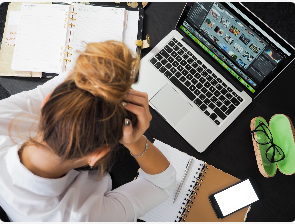
I used to think I was just lazy.
The list sat there every morning — items I'd carried from yesterday, and the day before that, and the week before that. Important things. Things that mattered. And somehow, despite having the time, the intention, and the ability, I would find a way to not do them.
I'd clean something that didn't need cleaning. I'd check my phone for the seventh time. I'd make another cup of coffee and call it preparation.
Sound familiar?
Here's what I eventually learned — and what changed everything when I finally understood it: procrastination is almost never about laziness. It's about fear. It's about self-doubt that's too uncomfortable to look at directly. It's about a nervous system that has learned, very efficiently, to avoid anything that might end in failure, judgment, or disappointment.
Once I stopped fighting myself and started getting curious about what was actually happening, things began to shift.
The Real Reason We Procrastinate
Most of us have been taught to treat procrastination as a character flaw — a failure of discipline, a lack of motivation, evidence that we're not trying hard enough. That framing is not only unhelpful, it's inaccurate.
Research consistently shows that procrastination is an emotional regulation problem, not a time management problem. We don't avoid tasks because we can't manage our schedules. We avoid them because they trigger uncomfortable feelings — anxiety about the outcome, fear of not being good enough, uncertainty about where to even start.
And avoidance works. In the short term, it genuinely works. The moment you decide you'll do it tomorrow, there's a small but real flood of relief. Your nervous system rewards the avoidance. Which is why the cycle is so hard to break through willpower alone — you're fighting a biological response, not a bad habit.
The path out isn't more discipline. It's more self-awareness, a little self-compassion, and a few practical tools that work with your brain instead of against it.
What Finally Worked For Me
I want to be honest with you: I didn't find a magic system that fixed everything overnight. What I found was a combination of small shifts that, practiced consistently, added up to something that felt like genuine freedom.
Name the fear, not the task
When I found myself avoiding something, I stopped asking "why haven't I done this yet" and started asking "what am I actually afraid of here?" The answers were usually humbling. I'm afraid it won't be good enough. I'm afraid of what happens if it goes wrong. I'm afraid of looking foolish.
Naming the fear out loud — or writing it down — removes some of its power. It makes it concrete and therefore addressable, rather than a vague dread that poisons the whole day.
The two-minute rule — taken seriously
If something takes less than two minutes, do it immediately. This sounds too simple to matter. It is not. The number of things we let pile up — emails, decisions, small tasks — that could be cleared in ninety seconds is staggering. Getting those off the list creates mental spaciousness that makes the bigger things feel less overwhelming.
Write it down — on paper, not a screen
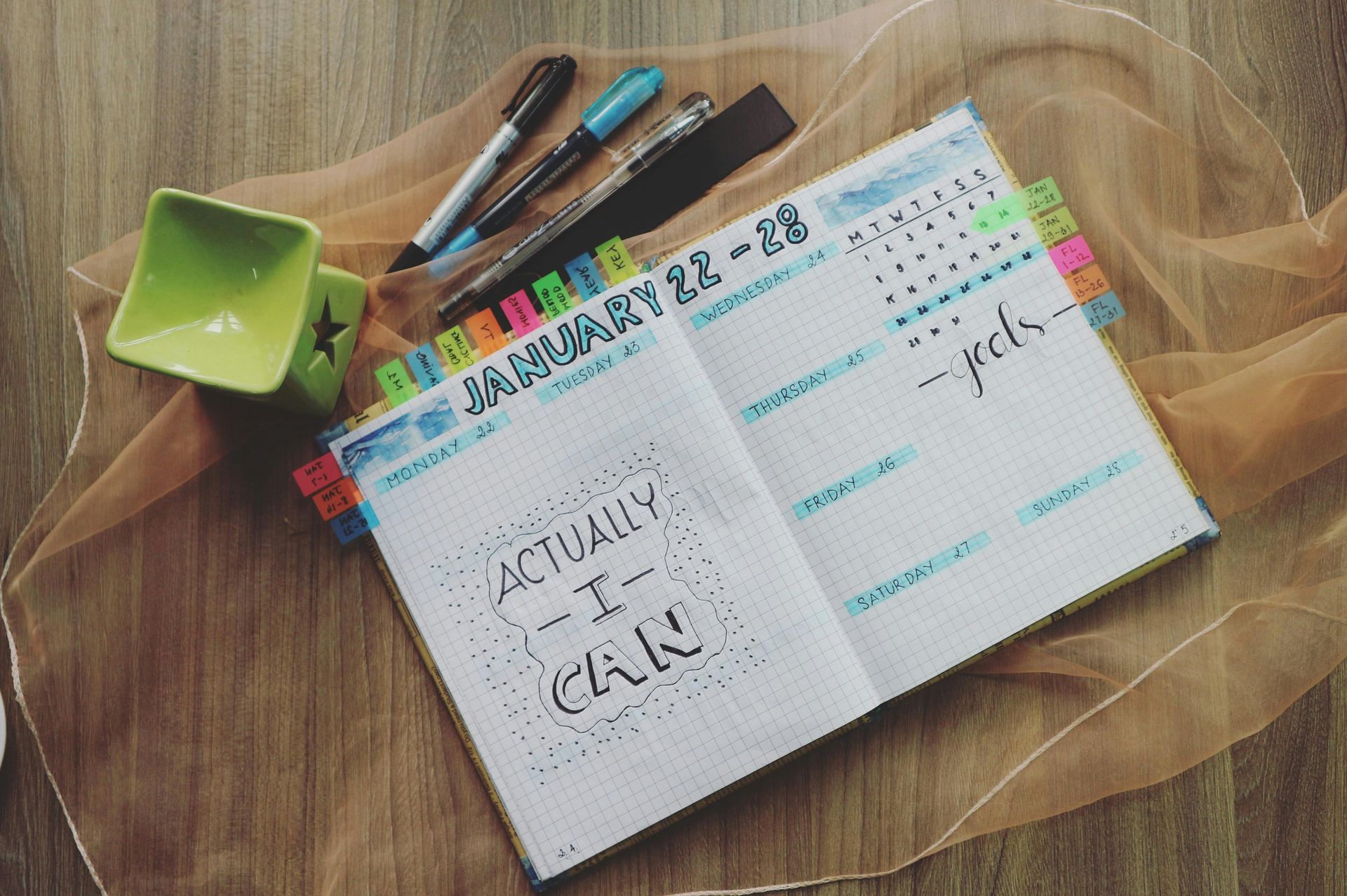
There is something about physically writing a task on paper that creates commitment in a way that a digital to-do list simply doesn't. I don't fully understand the neuroscience of it but I have experienced it consistently — when I write something down in a dedicated notebook, I do it. When it lives in an app, it waits indefinitely.
I started keeping a simple daily planner — not an elaborate system, just a place to write three things I actually intend to accomplish each day. Three. Not fifteen. Three. The specificity and the physical act of writing changed my follow-through completely.
The
Panda Planner is the one I use and recommend most — it combines daily planning with a gratitude and reflection practice that addresses both the productivity and the emotional side of procrastination. It's become the first thing I open every morning and the last thing I close at night.
The Kindness Factor
The single most counterproductive thing I used to do when I procrastinated was beat myself up about it. The self-criticism was relentless — and it made everything worse. Shame and guilt do not motivate action. They motivate more avoidance.
What actually helped was treating myself the way I would treat a friend who was struggling. With patience. With the recognition that this is hard and human and not evidence of fundamental failure.
Dr. Kristin Neff's work on self-compassion was genuinely transformative for me in this area. Her book,
Self-Compassion: The Proven Power of Being Kind to Yourself, reframes what it means to take yourself seriously — not through relentless self-improvement, but through the kind of honest, gentle relationship with yourself that actually produces lasting change. I return to it regularly.
Creating An Environment That Works For You
Procrastination thrives in cluttered, distracted, unstructured environments. This isn't a moral failing — it's just how our brains work. Attention is a limited resource and we spend it on whatever is loudest.
One of the most effective changes I made was creating a physical space that signals focus. A cleared surface. Natural light when possible. Phone in another room or face down. A specific playlist that my brain now associates with getting things done.
Noise-canceling headphones were a revelation. I know that sounds like a small thing but the ability to genuinely control my auditory environment — to step into focused work without the ambient noise of life pulling at my attention — made a measurable difference. The
Sony WH-1000XM5 headphones are the ones I have and use daily. Worth every penny for anyone who works from home or in a busy environment.
The Permission You've Been Waiting For
You don't need to become a different person to stop procrastinating. You don't need to develop iron willpower or rewire your personality or follow a thirty-step productivity system.
You need to get a little curious about what's underneath the avoidance. You need to be a little kinder to yourself when you fall short. And you need a few simple tools that lower the friction between intention and action.
That's it. Everything else is noise.
Start with one thing on your list that you've been avoiding. Write it down on paper. Ask yourself what you're actually afraid of. Then do the smallest possible version of it — not the whole thing, just the first step.
That's how it begins.