Then This Happened

This post contains affiliate links. As an Amazon Associate We earn from qualifying purchases at no additional cost to you.
I'll be honest with you: for most of my life, gratitude practice felt like self-help cliché. Three things you're grateful for. Write them down. Feel better.
It seemed too simple to be real. Too soft to make a difference. Like something you'd find on a motivational poster in a waiting room.
Then I went through a particularly hard stretch — the kind that grinds you down slowly until you look up one day and realize you haven't felt genuinely okay in months. A friend suggested, gently, that I try keeping a gratitude journal. I almost said no.
I didn't. And what happened over the following weeks surprised me enough that I want to share it honestly — not as a conversion story, but as a real account of what the practice actually does and doesn't do, and why the science behind it is more interesting than the cliché suggests.
What The Research Actually Says
Gratitude research has exploded in the past two decades and the findings are consistent enough to take seriously.
Dr. Robert Emmons at UC Davis — one of the leading researchers in this field — has run studies showing that people who write about what they're grateful for weekly report significantly higher levels of well-being, more optimism about the coming week, and fewer physical health complaints than control groups who write about daily hassles or neutral events.
The neuroscience is equally interesting. When you consciously practice gratitude, your brain releases dopamine and serotonin — the same neurotransmitters targeted by antidepressant medications. This isn't coincidence. Gratitude activates the medial prefrontal cortex, the area of the brain associated with learning and decision making, and over time it appears to rewire the brain's negativity bias — the default tendency to notice and weight negative experiences more heavily than positive ones.
That negativity bias exists for evolutionary reasons — our ancestors needed to notice threats to survive. But in modern life, running that same software on low-grade daily stressors keeps us in a chronic state of mild threat-response that exhausts us without protecting us from anything.
Gratitude practice interrupts that loop. Not by pretending everything is fine. But by deliberately training attention toward what is genuinely good, alongside everything that isn't.
What It Actually Felt Like
The first week I kept a gratitude journal, I wrote the same three things every day. Coffee. My daughter. Sunshine. It felt mechanical and slightly embarrassing.
My friend told me to be more specific. Not 'my daughter' but 'the way my daughter laughed at something ridiculous at dinner.' Not 'sunshine' but 'the particular light through the kitchen window at 7am.'
That specificity changed everything. The practice stopped feeling like a checklist and started feeling like noticing. Like paying a different kind of attention to my own life.
Within about two weeks I noticed something I hadn't expected: I was less reactive. Not because anything had changed externally — the stressors were identical — but because my brain seemed to have a slightly wider view. It could hold the difficult things and the good things at the same time, rather than tunneling into whatever was hardest.
I'm not saying gratitude is a cure for anything serious. It isn't. But as a daily practice it does something real — something measurable — to the quality of ordinary experience. And that turns out to matter more than I expected.
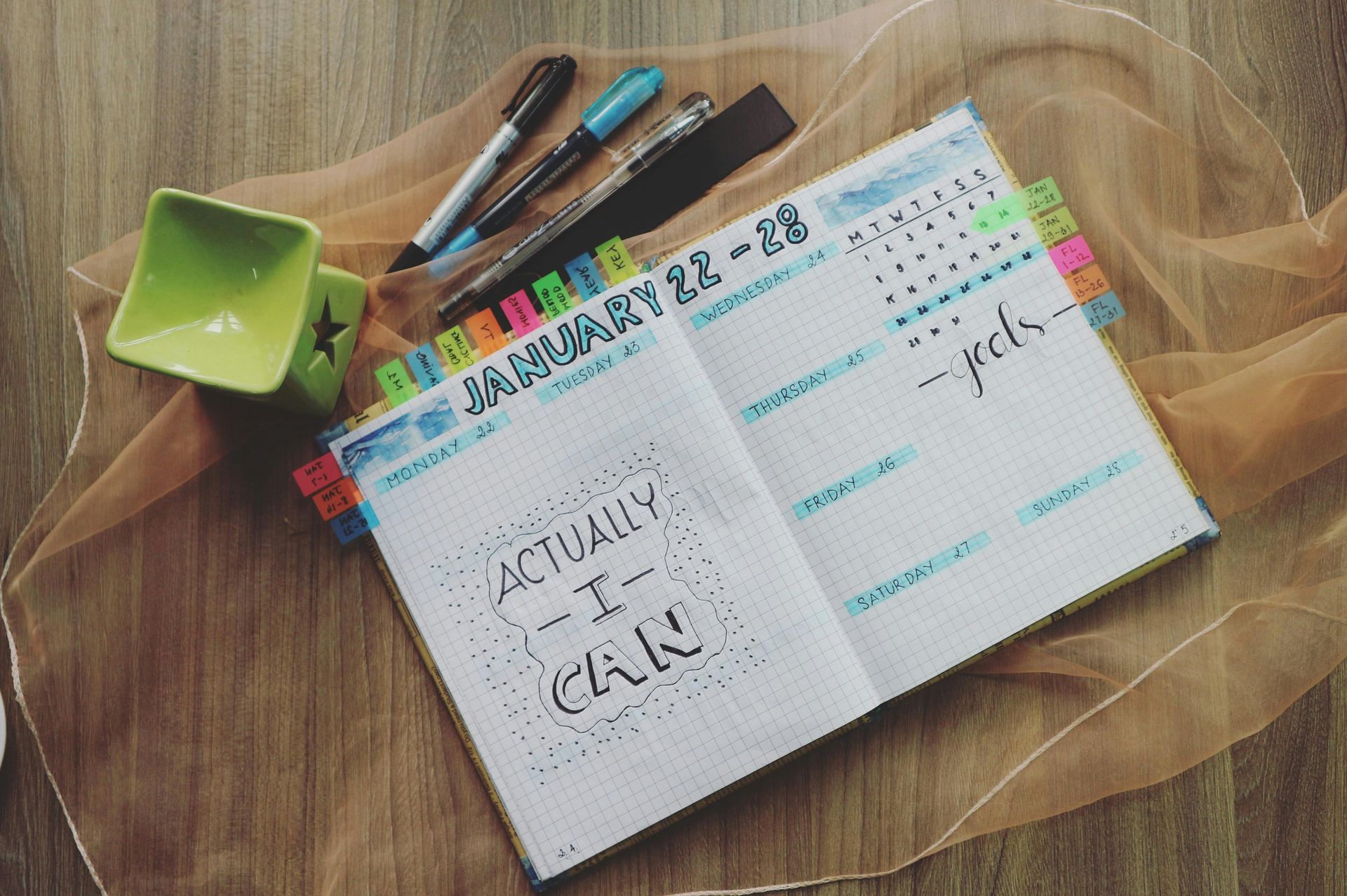
The journal I use is the Five Minute Journal by Intelligent Change — structured enough to remove the blank-page hesitation, brief enough to actually do every day, and thoughtfully designed in a way that makes the practice feel like a ritual rather than homework. I've recommended it to more people than I can count.
Gratitude And Your Relationships
One of the less-discussed effects of gratitude practice is what it does to how you see other people.
When you're regularly looking for what's good — what's working, what you appreciate — that lens doesn't stay contained to your own life. It starts to apply to the people around you too. You notice what your partner does rather than what they don't. You catch your friend's kindness rather than cataloguing their shortcomings.
This isn't naive positivity. It's a recalibration of attention. And the research backs it up — studies consistently show that grateful people report higher relationship satisfaction, more willingness to forgive, and deeper feelings of connection than those who don't practice gratitude.
Expressing gratitude directly — telling someone specifically what you appreciate about them — has an even stronger effect. It's one of the simplest and most underused tools for strengthening relationships that exist.
Gratitude When Things Are Hard
I want to address the objection I always had to gratitude practice, because I know it's the one most women carry: it can feel dismissive of real pain.
When you're grieving, or exhausted, or genuinely struggling, being told to find something to be grateful for can feel like being told to smile through it. Like your pain is being minimized. I understand that resistance completely.
What I've come to believe is that gratitude practice done well isn't about denying difficulty. It's about holding both — the hard and the good — simultaneously. Not replacing one with the other.
Some of the most profound gratitude I've felt has come in the middle of genuinely difficult periods. Not gratitude that the difficulty existed, but gratitude for the people who showed up, the small moments of beauty that persisted anyway, the evidence of my own resilience that I might not have noticed without specifically looking for it.
That practice of looking — deliberately, specifically, regularly — is what changes the brain over time. Not the content of what you find. The looking itself.
For the deeper work of understanding how emotions and gratitude interact — how to practice appreciation without bypassing genuine feeling — The Gifts of Imperfection by Brené Brown is the book I've returned to most. Her chapter on gratitude and joy is one of the most honest things I've read about why the practice matters and how to do it without spiritual bypassing.
How To Start Without Overthinking It
You don't need a special journal. You don't need a perfect morning routine. You don't need to do this the right way.
You need a pen, a piece of paper, and two minutes. That's the entire barrier to entry.
Write three specific things you're grateful for. Not categories — specifics. Not 'my health' but 'the fact that I woke up without pain this morning.' Not 'my home' but 'the way my living room looks at night with the lamp on.'
Do it for seven days. Don't evaluate it. Don't decide whether it's working. Just do it for seven days and notice what you notice.
If you want to formalize the practice — to give it a container that makes it easier to sustain — a gratitude journal with prompts removes the friction of the blank page and adds a gentle structure that deepens the reflection over time. The Positivity Journal by Papier is one of the most beautifully designed options available — thoughtful prompts, elegant format, the kind of object you actually want to pick up each morning.
I still roll my eyes at motivational posters. That hasn't changed.
But I write in my journal every morning. And I notice, consistently, that the days when I do are different from the days when I don't.
That's not a cliché. That's just what happened.
Start tonight. Three things. Specific ones.
Patricia Elise