Reclaim Your Childs Early Years
It happened on a Tuesday afternoon that looked like every other Tuesday afternoon.
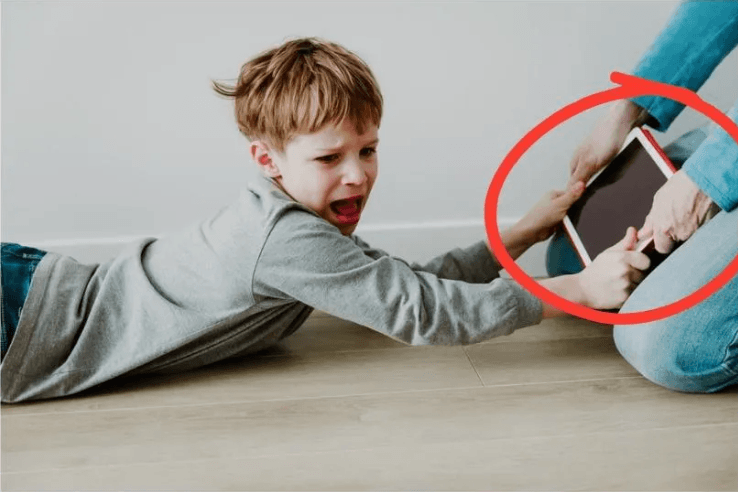
My daughter was curled up on the couch, iPad propped against a throw pillow, eyes glazed, completely unreachable. I called her name three times before she even blinked. When I finally asked her to put it down for dinner, the reaction was immediate — tears, protest, a negotiation that somehow lasted longer than the meal itself.
I stood in the kitchen afterward, staring at the wall, and thought: when did this become our normal?
The truth is, I knew exactly when. It crept in slowly, the way these things always do. First it was a useful distraction on long car rides. Then a reward for good behavior. Then a way to buy myself twenty minutes of quiet on a hard day. Before long it had woven itself into the fabric of every afternoon, every weekend morning, every waiting room, every restaurant booth.
The iPad had become the path of least resistance. And I had let it happen.
The Guilt Is Real — But It's Not the Whole Story
I want to say something to every mother reading this who recognizes that scene: the guilt you feel does not mean you failed. It means you're paying attention.
We live in a world that handed us these devices and told us they were educational, enriching, even beneficial. We were never handed a clear line between healthy use and something that starts to quietly crowd out everything else. Most of us didn't see the shift happening until we were already deep inside it.
But here's what I've come to understand — and what took me longer than I'd like to admit to really sit with:
The first seven years of a child's life are not a rehearsal.
The connections being formed, the creativity being nurtured or neglected, the emotional vocabulary being built or bypassed — all of it is happening right now, in these ordinary days that feel so forgettable but aren't. Neuroscience has been saying this for decades. The developing brain in early childhood is forming architecture that will shape how a child learns, relates to others, and handles difficulty for the rest of their life.
Excessive passive screen time doesn't support that process. In many ways, it competes with it.
What The Battles Are Actually Telling You
The meltdown when you take the iPad away isn't just a tantrum. It's a physiological response. Screens — particularly fast-moving, reward-loop content — trigger dopamine in the brain the same way other highly stimulating experiences do. When that stimulus is removed, the brain protests. Loudly.
That's not a parenting failure. That's biology.
What it means, though, is that willpower alone — yours or your child's — isn't going to solve this. Setting a timer doesn't work if the underlying pull hasn't changed. Going cold turkey without a plan creates suffering for everyone. And the guilt-and-cave cycle that so many of us know intimately just reinforces the pattern.
What actually works is something different. It requires working with how the brain functions rather than against it — gradually replacing the digital dopamine loop with real-world experiences that are genuinely engaging, not just marginally less interesting than a screen.
That means creative play. Physical movement. Storytelling. Connection with you.
And here's the thing no one tells you enough: children still want those things. They haven't forgotten how to play. They just need the space and the pathway back.
What I Started Doing Differently
I stopped framing it as a battle to win and started thinking of it as an environment to redesign.
A few things shifted everything for us:
• I stopped cold-ending screen time with no warning. A five-minute heads-up — consistently — changed the transition almost immediately.
• I made sure something genuinely appealing was already waiting. Not a lecture about going outside. An actual activity — art supplies on the table, a blanket fort half-started, a walk she got to choose the direction of.
• I stopped negotiating in the moment. The rules were set when everyone was calm, not mid-battle. That alone removed so much of the friction.
• I gave her language for what she was feeling. "I know it's hard to stop when you're in the middle of something fun." That acknowledgment — without caving — turned out to matter more than I expected.
None of this was magic. It took consistency. There were still hard days. But the cumulative effect, over a few weeks, was genuinely striking. Not just less conflict — but a child who started reaching for other things again on her own. Who asked me to read to her. Who invented an entire game involving a cardboard box and some string and played it for an hour.
That child had been there the whole time.
If You're Ready To Try A Different Approach
I recently came across a resource that puts everything I stumbled my way toward into a clear, structured framework — and honestly, I wish I'd had it earlier.
It's called the Digital Detox Formula — a 21-day step-by-step system built specifically for families navigating exactly this. It covers the reconnection piece, the transition strategies, how to handle social situations without screens, and how to rebuild the kind of creative, imaginative childhood that devices have been quietly crowding out.
You can find it at jonathonnorwin.com. It's practical, affordable, and the kind of thing you read and immediately recognize as real — not theoretical.
Whether you use that resource or carve your own path, the most important thing is simply this: you noticed. You're asking the question. That's not a small thing.
These early years are irreplaceable — but they're not gone. There's still so much time to reclaim them.